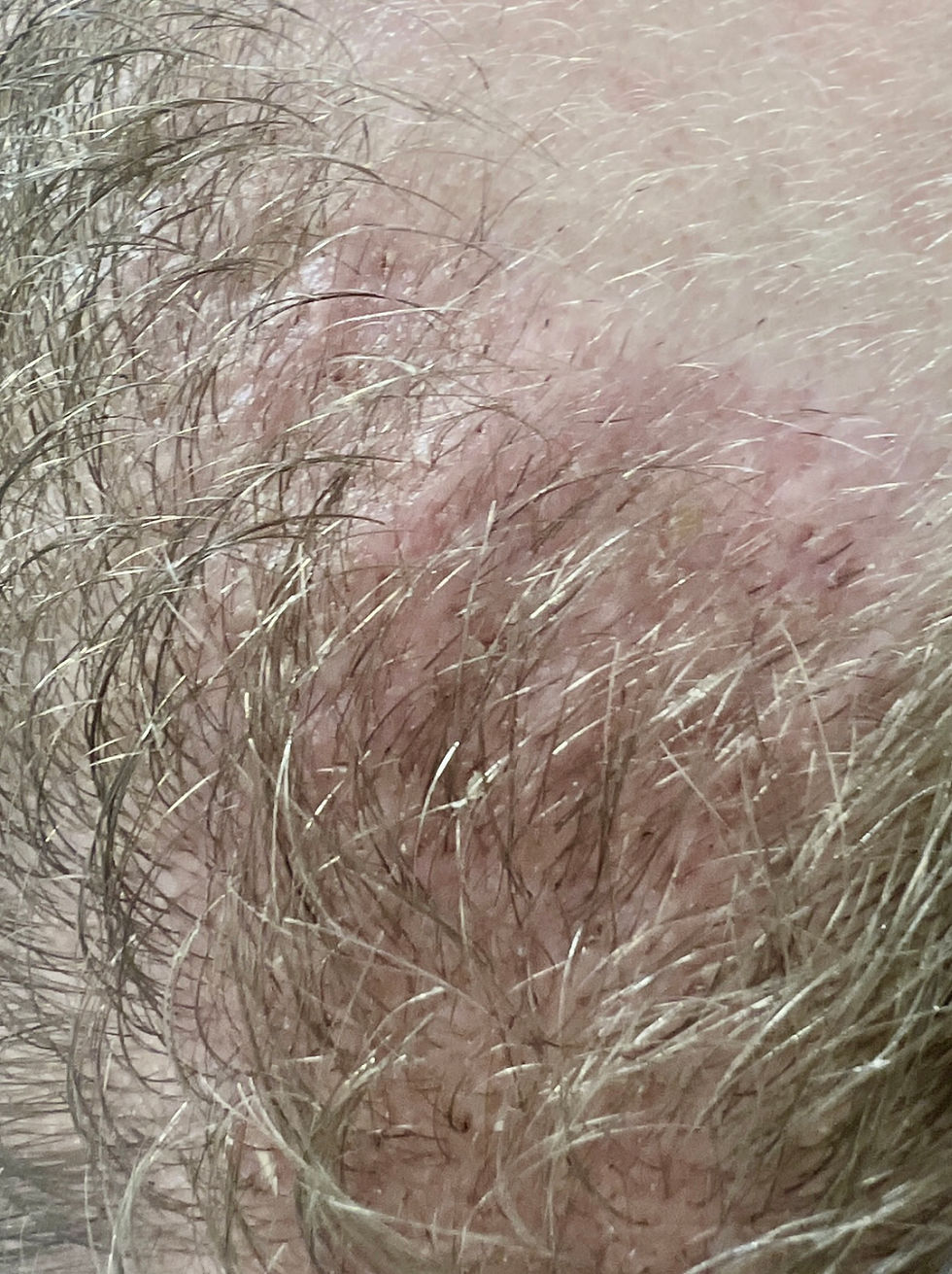
Instant Long Hair Transplants? The Rise of Long Hair FUE

Updated: Jun 7
Can You Have A Hair Transplant Without Looking Like You’ve Had One?
One of the biggest reasons many people delay or avoid having a hair transplant is not necessarily the surgery itself.
It is the aftermath.
The shaved scalp.
The redness and crusting.
The “plucked chicken” appearance.
The obvious signs that a procedure has been done.
For many men — especially younger men, professionals, public-facing individuals, or people who simply value privacy — this temporary appearance can feel socially and psychologically difficult.
Traditional FUE (Follicular Unit Extraction) hair transplants often involve shaving large areas of the scalp to allow the surgeon to harvest and implant grafts efficiently. Although the final results can eventually look excellent, there is usually a period afterwards where the transplant is quite visible.
A recent experimental paper published in the Journal of Cutaneous and Aesthetic Surgery explored whether this could eventually change. The researchers investigated a technique known as “Long Hair FUE” combined with a range of biological and surgical modifications designed to reduce visible downtime and preserve some immediate cosmetic improvement after surgery.
What Is Long Hair FUE?
In a traditional FUE transplant, the donor area is usually shaved very short before follicles are removed and transplanted.
In Long Hair FUE, the surgeon attempts to harvest and implant longer hairs without fully shaving the scalp. The idea is simple but appealing:
instead of waiting months to see visible hairs again, the patient leaves surgery already appearing to have more hair immediately.
In theory, this creates:
- less visible downtime
- greater privacy
- faster return to work and social activities
- a more psychologically comfortable recovery period
The paper describes this as an attempt to achieve “instant” aesthetically pleasing results with minimal downtime.
The Problem: Transplanted Hairs Often Shed
One of the frustrations many patients experience after a hair transplant is that the newly transplanted hairs often fall out within the first few weeks.
This is commonly called:
- shock loss
- shedding
- post-transplant telogen effluvium
Importantly, this does not usually mean the transplant has failed.
The follicles themselves often survive beneath the skin and later produce new hairs over the following months. However, the temporary shedding phase can be emotionally difficult because patients may briefly appear similar — or occasionally worse — than before surgery.
The researchers behind this study attempted to reduce that shedding phase.
What Did The Researchers Actually Do?
This was not simply a “long hair transplant.”
The surgeons combined multiple techniques together, including:
- long hair FUE extraction
- simultaneous graft extraction and implantation
- reducing the time grafts spent outside the body
- careful “no touch to root” handling techniques
- platelet-rich plasma (PRP)
- biological additives and growth factors
- reduced use of adrenaline during surgery
- specialised graft storage solutions
The goal was to preserve as many visible transplanted hairs as possible during the early healing phase.
What Were The Results?
The study only included 10 patients, so this should still be viewed as early experimental work rather than established evidence.
However, the results were interesting.
The authors reported that many transplanted hairs remained visibly retained during the early months after surgery, rather than shedding immediately as commonly occurs in standard transplants.
By 9 months, the average graft retention was reported to be around 99%.
The paper also showed examples where patients appeared cosmetically improved immediately after surgery because the transplanted hairs were already long enough to blend into the existing hairstyle.
Why This Matters Psychologically
This may be the most important part of all.
Hair transplantation is not only about follicles and graft counts.
It is also about:
- confidence
- identity
- social comfort
- privacy
- work
- relationships
- self-image
Many patients are not afraid of the final result.
They are afraid of the transition.
For some people, shaving the scalp and walking around visibly recovering from surgery feels emotionally overwhelming. Some delay surgery for years because of this alone.
A technique that genuinely reduced visible downtime could therefore have a major psychological impact, even if the final long-term density were similar to conventional approaches.
Is This The Future Of Hair Transplants?
Possibly - but cautiously.
Long Hair FUE is technically demanding and currently far less common than standard FUE.
This particular study also has important limitations:
- very small sample size
- no control group
- multiple interventions used simultaneously
- difficult to know which components truly mattered
- retrospective design
Some aspects of the paper are also more speculative than firmly evidence-based, particularly around stem cell processing and certain biological additives.
However, the broader direction is interesting.
Modern hair restoration is increasingly moving toward:
- less downtime
- more natural recovery
- better concealment
- faster return to normal life
- combining surgery with regenerative medicine
- improving the patient experience, not just the final graft count
My Thoughts
I think this paper highlights something important that many clinicians already know intuitively:
patients do not simply want “more hair.”
They also want:
- less disruption
- less embarrassment
- less visible recovery
- less fear
- less stigma
The “plucked chicken” phase genuinely puts many people off having a hair transplant.
Techniques that reduce this may become increasingly important in the future.
Whether this exact protocol becomes mainstream remains uncertain. But the overall concept - preserving immediate cosmetic appearance while reducing downtime - is likely to become a growing area of innovation within hair restoration surgery.
Authored by Dr Gwen Adey BDS MFDS RCS
First published: 17/05/26
Medical Disclaimer
This article is intended for educational purposes only and should not be taken as individual medical advice. If you are experiencing hair loss, speak to a suitably qualified healthcare professional.
Enjoyed this article?
Stay up to date with the latest hair loss research, emerging treatments and practical advice from Dr Gwen Adey.